Leadership in Chaos: 36th edition.
tiny experiments, moments, the rapids are the river.
“The work right now is to become immense. We have to get our arms around immense things. Violence and hatred and bigotry and racism. And also, around love and compassion and devotion and a certain fidelity to protect what is alive. We have to become immense. This is not a time to become small.”
Francis Weller, psychotherapist and author.
Performance: tiny experiments.
As the new year lurches forward through the wind and rain, it’s a good time to think about the road ahead. When the clouds lift, what will you start, what will you stick with, and what will you master? Neuroscientist Dr Anne-Laure Le Cunff wrote about the myths that make us quit before we get good, and identified 5 that derail us. From believing mastery is a destination, when in reality, it has no finish line. To think that improvement is linear when it can be erratic. That extreme intensity wins when, in truth, it’s all about steady consistency. That technique is everything when it’s more about process. And that mastery feels easy once achieved, when in reality it never gets easier, just less frustrating. She suggests three things to improve mastery. Running tiny experiments, designing feedback loops, and approaching challenges with curiosity (like desirably difficult puzzles to solve). Her book and recent TEDx Talk on Tiny Experiments, offers really interesting insight on mastery.
A thought for leaders: Real mastery isn’t about arriving, it’s about becoming. And experimentation is key to that. Just like it is in nature and in science. Yet, we’re often so desperate for control that we don’t experiment. We stay stuck. If control is about clinging to what you know, experimentation is about letting go of the illusion of certainty. She suggests you need only two questions. What will you experiment with? And what will the trial period be? She calls these “tiny experiments”. No goals, no habit, no KPIs. Just curiosity, and exploration. So, what’s your first tiny experiment going to be?
Culture: moments.
Bruce Daisley and Kevin Green, Chief People Officer for First Group (UK bus operator), recently chatted about how culture is built on moments of truth. Kevin needed to change a traditional bus business – focused on assets and timetables, to a service business – focused on people and culture. People were seen as a cost, and commodity. To change things, he went deep into the org to listen and talk. And as Kevin says, “Conversations change organisations”. Hundreds of ideas were generated, tested, filtered, then rolled out. A bottom up change program, felt like it was being done with staff, not to them. Everything focused on two simple questions – how do we make things better around here? What can we do to improve your life, and the customers. What was really interesting, though, was that he recognised that each day, a driver faces 25 moments of truth that will shape what customers think of the service. That’s 6,000 moments a year per driver, and with 14,000 drivers, 80 million annual moments of truth. This became the challenge. Change those, and he’d change the business.
A thought for leaders: Moments of truth exist in every business. Every hour. Of every day. Moments when a business shows what, and who, it really is. Without being overseen or controlled. Organic moments that matter to customers. That’s when culture counts. Sometimes those moments have hard measures, but sometimes they don’t. It’s a look, a kindness, a smile. What do your moments of truth look like? Can you improve them? And what cultural shifts do you need to enable that?
Leadership: the rapids are the river.
2026 has begun with a nuclear bang. And the forecast is more exhausting uncertainty, and change. Michael Hudson wrote about the paradox of 2026: change fatigue and leaders’ thirst for complexity. Although he experienced enormous change fatigue with leaders in 2025, paradoxically, the two things of his that resonated most with leaders weren’t buzzwords or frameworks, but two complex, intangible ideas. The first, negative capability (from the 19th-century poet John Keats), describes the ability to remain in uncertainty without grasping for premature resolution, and resisting the urge to collapse complexity into false clarity. It ensures leaders make better decisions and build more resilient teams. The second, sensemaking, describes the shift from leaders as answer-givers to leaders as meaning-makers. The best leaders aren’t the ones with the best answers, but those who can host the best conversations.
A thought for leaders: The world relentlessly pressures leaders to quickly decide, act, and project confidence. But in this new world, there may be growing advantage in remaining unruffled by not knowing. By not having all the answers immediately. By not seeking false clarity. 2026 will be less about waiting for calm and more about building the capacity to lead in a world of continuous change. As Michael writes, “the calm water we’ve been paddling toward? It’s a mirage. The rapids are the river now”.
Podcast: Ep 73: The Declining Art of Conversation: Part 1
We’ve included EP 73: The Declining Art of Conversation – Part 1, which connects directly to the themes of sensemaking, leadership presence and the quality of conversations that shape outcomes. This is the first of a 3-part mini series focusing on “The Declining Art of Conversation”.
You can listen to it here.
Enjoy revisiting or newly discovering it 😊
You can follow Flow Group on LinkedIn here.
Hope you enjoyed, and please share your thoughts in the comments section below.
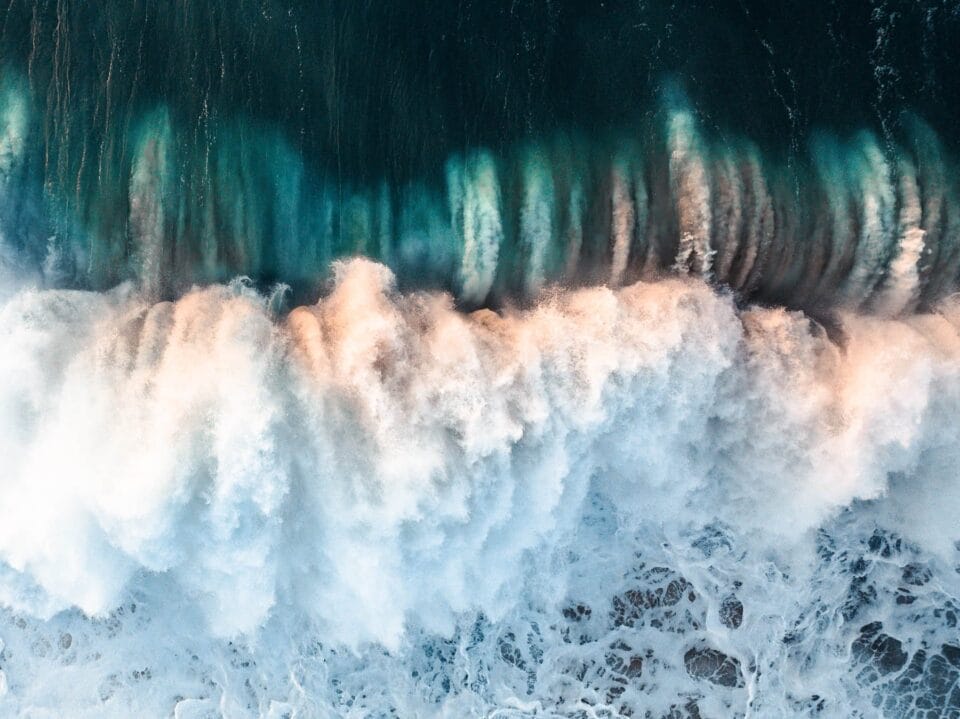
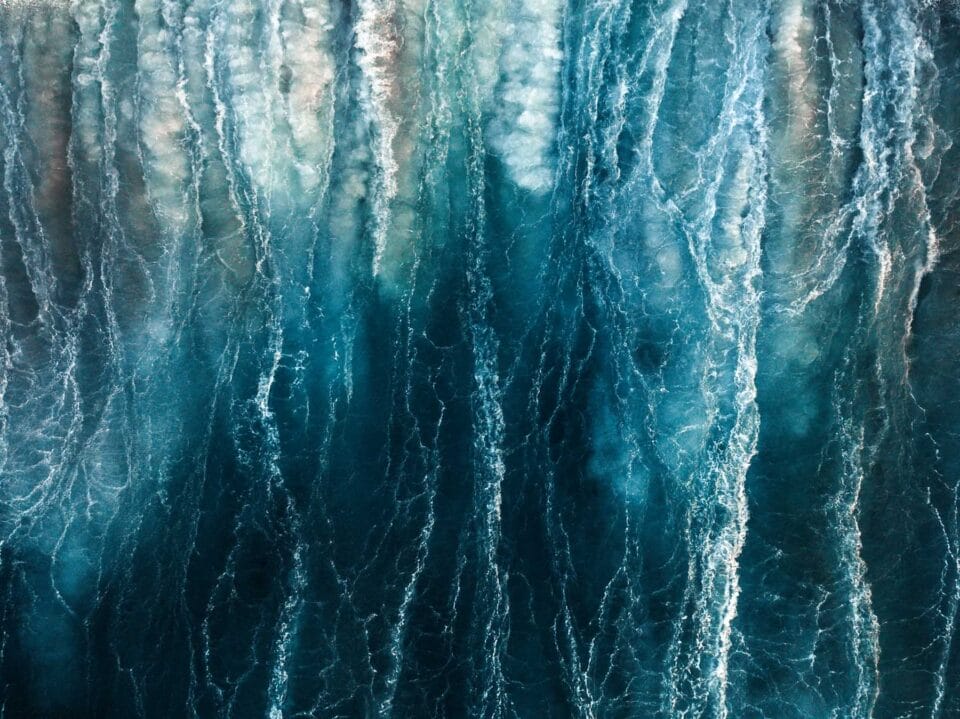
P.S. This month’s featured artist is photographer Kevin Krautgartner. In this series, Pipeline, he celebrates the mesmerising, barrel-shaped breakers on a reef off the North Shore of O’ahu, Hawaii. Here, some of the world’s most famously thrilling and dangerous waves present enticing conditions for surfing in an area known as the Banzai Pipeline. This series of aerial images highlights the formidable force of water crashing and whorling along the shore, and puts the enormous power of nature and the energy of our planet’s oceans into a unique perspective.