
Leadership in Chaos: 32nd edition.
three body problems, jazz rhythms, belief crisis.
“The world will ask you who you are, and if you don’t know, the world will tell you.”
Carl Jung

Culture: three body problems.
A thought for leaders: Traditional change management looks at problems, identifies what’s broken, and tries to fix it (root cause analysis). But organisational problems, are much more like three body problems. Only by looking at the system, and how each element interacts together, can we truly understand their complex nature. They can’t be deconstructed. They are, as Rory says, Sudoko problems. And small changes to the someone, the somewhere, or the something, can have huge impact. The individual is obviously important, but remember…..it’s always a three body problem.
Leadership: jazz rhythms.
A thought for leaders: One way to lay down a beat, as recent HBR research found, is with team rituals. Collective activities (like huddles or progress updates) that teams regularly engage in (and attribute meaning to) can be hugely beneficial. They can provide a rhythm of metronomic certainty. Just like jazz, they help to enable collective individualism. Apart, then together. Independent, then collective. So, thinking about your own ensemble, do you keep the rhythm for them? Do you inspire your best talent to improvise brilliantly, to improve the entire group, but still keep to the beat? And are you consistently enabling them to play at their very best?
Culture: belief crisis.
A thought for leaders: Leaders are also meaning makers. You provide purpose. You inspire belief. Look at how filmmaker Christopher Nolan shapes beliefs, “Every film I do, I have to believe that I’m making the best film that’s ever been made. Films are really hard to make. They are all-consuming. So it had never occurred to me there were people doing it who weren’t trying to make the best film that ever was. Why would you otherwise? Even if it’s not going to be the best film that’s ever been made, you have to believe that it could be”. Passion and belief are contagious. Are you a super spreader for yours?
Podcast: EP 21: Bias in Chaos
We’ve included this episode because it ties closely to the Belief Crisis piece above. It explores how conviction can both comfort and confine. Strong beliefs reassure us, but they also filter how we see and experience the world, often unconsciously.
You can listen to it here.
Enjoy revisiting or newly discovering it 😊
You can follow Flow Group on LinkedIn here.
Hope you enjoyed, and please share your thoughts in the comments section below.
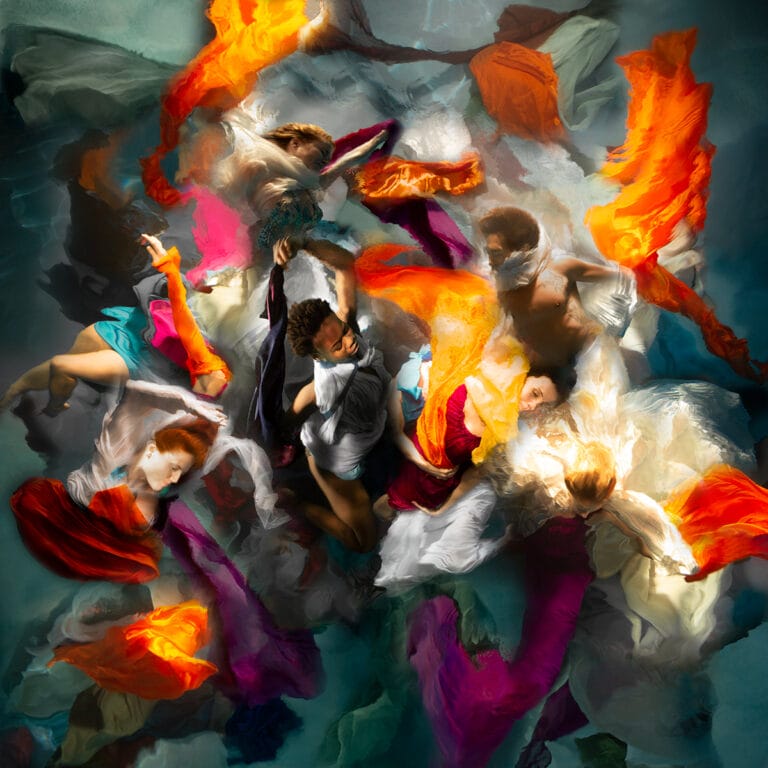
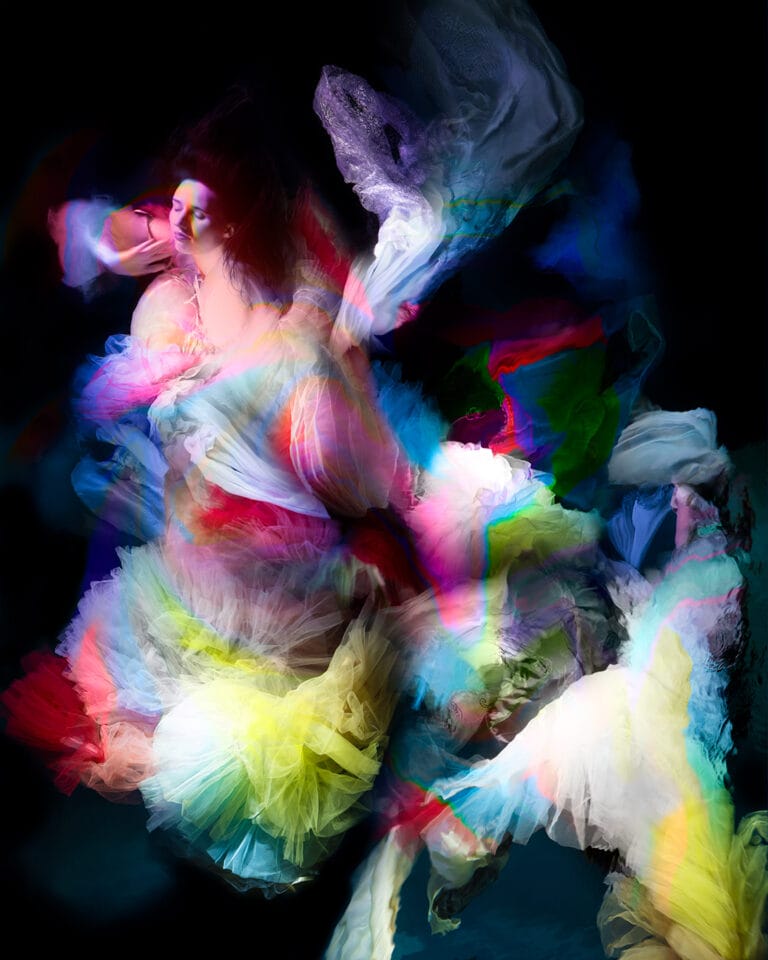
P.S. This month’s featured artist is Christy Lee Rogers. Rogers is known for her large-scale, maximalist photographs shot completely underwater, suspending figures in the midst of billowing garments. Using a range of lighting effects and vibrant fabrics to compose dramatic images, her style is evocative of Baroque or Rococo paintings and murals. Born in Hawai’i, she was fascinated by water from an early age. “For me, water has always been both chaos and freedom,” the artist says. “It strips away control and asks us to see ourselves in a different light. That’s where my stories begin.”