Leadership in Chaos – Leaders Digest: 31st edition.


Leadership in Chaos: 31st edition.

Ambition, givers, takers and matchers, sensemaking.

Hi 👋, welcome back to our 31st edition 🙌.


“We make our world significant by the courage of our questions and the depth of our answers.”

Carl Sagan, Cosmos


Leadership: ambition.

Ambition is a curious thing. Just like the power of love, it can make one man weep, and another sing. For many, ambition is their engine. Possessing them. Driving them forward. To want more and achieve more. But, as this great piece outlines, ambition can also be a curse. Ambitious people can be ruthless, manipulative and status-obsessed. And an ambitious life chasing extrinsic motivations can be hollow. But, as Swiss physician Paracelsus said 500 years ago, “all things are poison, and nothing is without poison; only the dose makes a thing not a poison”. Ambition is about balance. Enough to be constructive, not destructive. The trick is being clear about what you’re ambitious for, and why you’re ambitious for it.

A thought for leaders: David Brooks, the author of this piece, helpfully breaks ambition down into five struggles, which you can use to interrogate your own ambitions…..simply ask yourself “is my ambition more about……”…..

  1. Craft or reward – is it for intrinsic or extrinsic reward?
  2. Gift love or need love – is it from a sense of abundant joy, or hollowness?
  3. Excellence or superiority – is it to be a better you, or be better than them?
  4. High or low desires – does it have high, or low moral value?
  5. Aspiration or ambition – do you want to be better, or rise higher?

Culture: givers, takers and matchers.

 Are you a giver – what can I do for you? Or a taker – what can you do for me? Or do you balance both? Work psychologist Adam Grant wanted to understand this, for his bestselling book Give and Take. He surveyed over 30,000 people, across industries, and cultures. He found that most people (56%) sit in the middle(I’ll scratch your back, if you scratch mine). He called them Matchers. He also found that the lowest performers, were Givers. So busy giving to others, they often suffer themselves. But oddly, he also found that the best performers, were also Givers. Givers split into extremes. Over-represented at the bottom, and the top. But most importantly, he found that companies with more Givers, outperform those with less. Givers are gold. And the negative impact Takers have on a culture is x2 or x3 the positive impact of a giver.

A thought for leaders: The research is clear. Generosity has an overwhelming positive impact on the performance of a business. But are you intentionally designing a culture of productive generosity? Do you encourage it? Seek it out? Do you protect the Givers? Do you design a culture where help-seeking is the norm? And do you take the time to get the right people on the bus and weed out the Takers?


Culture: sensemaking.

Our world is now full of easy, cheap and instant answers. So we’re shifting from the “information age” to the “interpretation age”. This great Forbes piece by Michael Hudson, Sensemaking: A Leadership Superpower, outlines the importance of sensemaking for leaders now. Spoiler alert, it’s not about answers. Michael quotes a Jennifer Garvey Berger on leadership, where she says, “The most effective leaders are no longer the ones with the best answers, but the ones who host the best conversations.” He references Gallup research, which shows that employees need hope more than anything else from their leaders (56% of all positive leadership attributes, far exceeding trust 33%, compassion 7%, and stability 4%). And hope, he says, isn’t about sugar coating or quick answers, but helping people to make sense of complexity, find meaning in change, and discover their own capacity to navigate uncertainty.

A thought for leaders: If the future is more about sensemaking, how can you make the shift from answering to sensemaking? How can you ask better questions that create new understanding? How can you move from information transfer to meaning creation and allow multiple perspectives to surface and interact? And how can you help teams see situations through multiple lenses, with different frames of reference? Maybe if you start  doing these things, you’ll start making more sense of the world.


Podcast: EP 29: Deepening Connections in Chaos

 Aligned with our focus on sensemaking, we’ve added a classic podcast: EP 29: Deepening Connections in Chaos. This episode reminds us of the importance of understanding tacit wisdom, as it is where real trust and influence are built through our ability to connect or disconnect with other people.

You can listen to it here.

Enjoy revisiting or newly discovering it 😊


You can follow Flow Group on LinkedIn here.

Hope you enjoyed, and please share your thoughts in the comments section below.


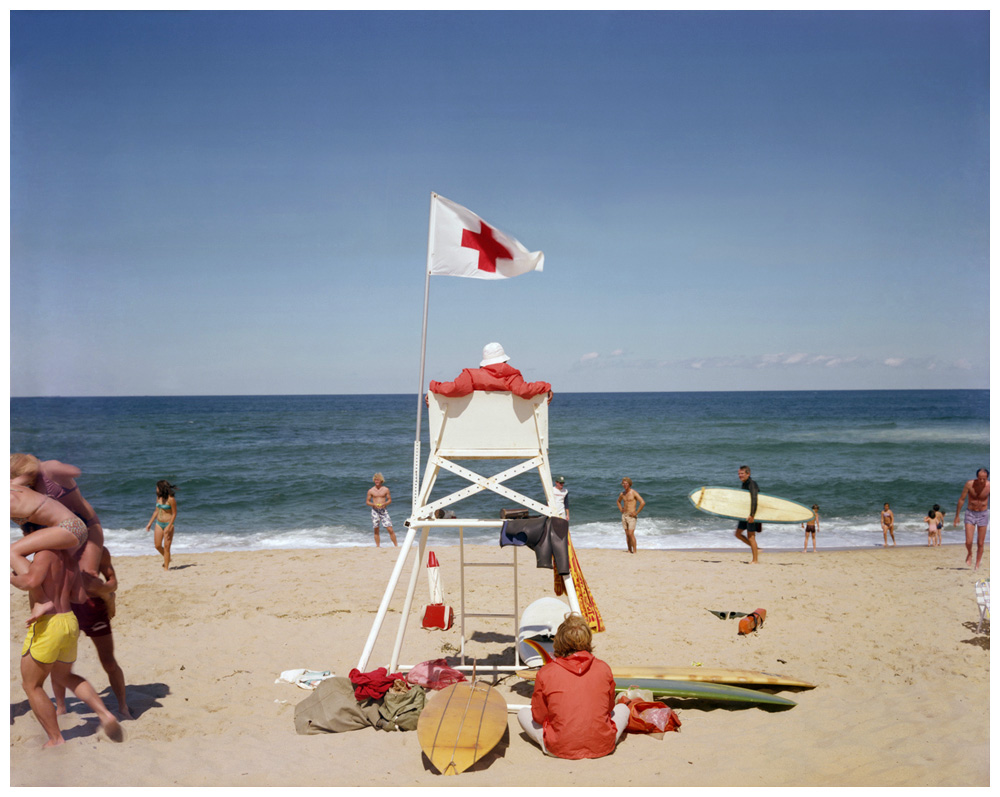
P.S. This month’s featured artist is Dutch-Croatian photographer Sanja Marusic. She is known for her use of colour, geometric constellating compositions and a dreamy lightness to her subject matter. Sanja lets her imagination saturate the lens of her camera. After graduating in fashion photography from the Royal Academy in the Hague, Marusic has since been featured in exhibits at Mauritshuis, the Van Gogh Museum, Paris Photo, Wynwood Art Miami, and Foam Amsterdam, among others.


Related Posts

Abstract purple curves create a dynamic wave pattern on a dark violet background.

We take our business seriously

Ourselves? Not so much