bespreekbaarheid, systems, impact.
Aug 04, 2026
Hi 👋, welcome back to our 42nd edition 🙌.
“Spend each day trying to be a little wiser than you were when you woke up. Discharge your duties faithfully and well. Step by step you get ahead, but not necessarily in fast spurts. But you build discipline by preparing for fast spurts … In the end, most people get what they deserve.”
-Charlie Munger

Culture: bespreekbaarheid.
Kaz Nejatian recently took over as CEO of US property platform Opendoor. It was on the brink of bankruptcy. Now he’s slowly, brutally changing things. In an interview with Shane Parrish, he gave some interesting perspective. He said that all success is unique, but all failures rhyme, and that one of the bigger issues he had to deal with was comfortable lies. They sink companies (and careers). One of those lies in Opendoor was that people had convinced themselves that the company was a victim of bad circumstances. Which was untrue and unhelpful. Kaz made it his mission to value truth over feelings. While people are generally truthful in the context of a situation, the larger the room, the less space there is for truth. Which, he believes, is game over. It’s why pizza teams work. Because small teams can be more truthful, and say things you might never say in a big room.
A thought for leaders: To deal with the comfortable lies that had rooted, Kaz introduced a principle which he called Say The Thing. If everyone’s in the service of the company and mission aligned, then everyone is in the service of truth. Which means no more defending mistruths or fiefdoms, and it means getting to the bottom of a problem without emotions getting in the way. The Dutch, who are famously direct, have a word for that kind of straightforwardness. It’s called ‘bespreekbaarheid’ (speakability). That everything can and should be talked about. Not rudeness, but an unwavering commitment to truth. Not easy, but a positive force if you can get it right.

Leadership: systems.
Though the World Cup ended a little anti-climatically and omni-shambolically, it was great and will be sadly missed by many. One of the tournament’s big stories was Norway. A country of 5.5m people got to the quarter-finals. Amazing. But as their head of player development points out, it was no accident. It was the result of two decades of work and three key things. Firstly, a huge investment in artificial pitches from 2010, which turned a summer sport, all year-round. The predictable surfaces also led to a more technical style, epitomised by skipper Odegaard. Secondly, a coaching revolution was ignited by the establishment of a national youth training system (NTS). 17 of their 26 squad play in Europe’s top 4 leagues, and most went through the NTS. Established in 2013, it’s funded with revenue from gambling. And thirdly, there are no league tables or trophies for kids in Norway; they just make football fun, which keeps youth players playing in Norway for longer.
A thought for leaders: Most teams dream of success and have high-reaching goals. Many never reach them. Because as James Clear wrote in the great book Atomic Habits, “you do not rise to the level of your goals, but fall to the level of your systems”. Norway got to the quarter-finals, not because they dreamed of it, but because they developed a system to get them there. That system produced a talented team of players, a great spirit of togetherness, and a nation pulling in the same direction.

Performance: impact.
Our final story is also World Cup related (sorry, not sorry). It’s about impact. Norway’s striker Erling Haaland, one of the tournament’s biggest stars, mostly strolled around the pitch indifferently. Lionel Messi, the world’s greatest ever player, and the World Cup’s all-time leading goal scorer, walked around the pitch 64% of the time. Yet, of the 12 goals Argentina scored, he scored 8 of them, and made 4. Doing “nothing” allows them both to do something. They’re scanning what opponents are doing and actively gaining insight to discover space, distance and possibilities. Spanish manager Vicente del Bosque once summed up the visionary play of the midfielder Sergio Busquets by saying “when you watch the game, you don’t see Busquets—but when you watch Busquets, you see the whole game”. It’s the same for Haaland and Messi. Their impact is awareness. When you watch them, you watch them watching the game.
A thought for leaders: When the great Italian footballing playmaker Andrea Pirlo moved to the US soccer league, he described it as having “a lot of running, too little play.” Haaland and Messi understand the difference. They understand the importance of motion with direction, to create impact. In organisations, too much time is spent wildly performing busyness. And too little creating impact in the right direction. Do you give your Haalands and Messi’s the necessary time and space to create that impact? Or are they doing too much running and not enough play?
Podcast: Ep 71: Confessions of a Guru – Part 4: Calmest Person in the Boat
This month, we have included Ep 71: Confessions of a Guru – Part 4: Calmest Person in the Boat, in support of themes focusing on the importance of remaining calm and observant under pressure.
In high-pressure moments, great leaders remain calm. But how?
This episode explores emotional contagion, leadership under stress, and why staying composed defines your leadership reputation.
Tune in to learn how to lead with confidence, even in uncertainty.
You can listen to it here.
You can follow Flow Group on LinkedIn here.
Hope you enjoyed it, and please share your thoughts in the comments section below.
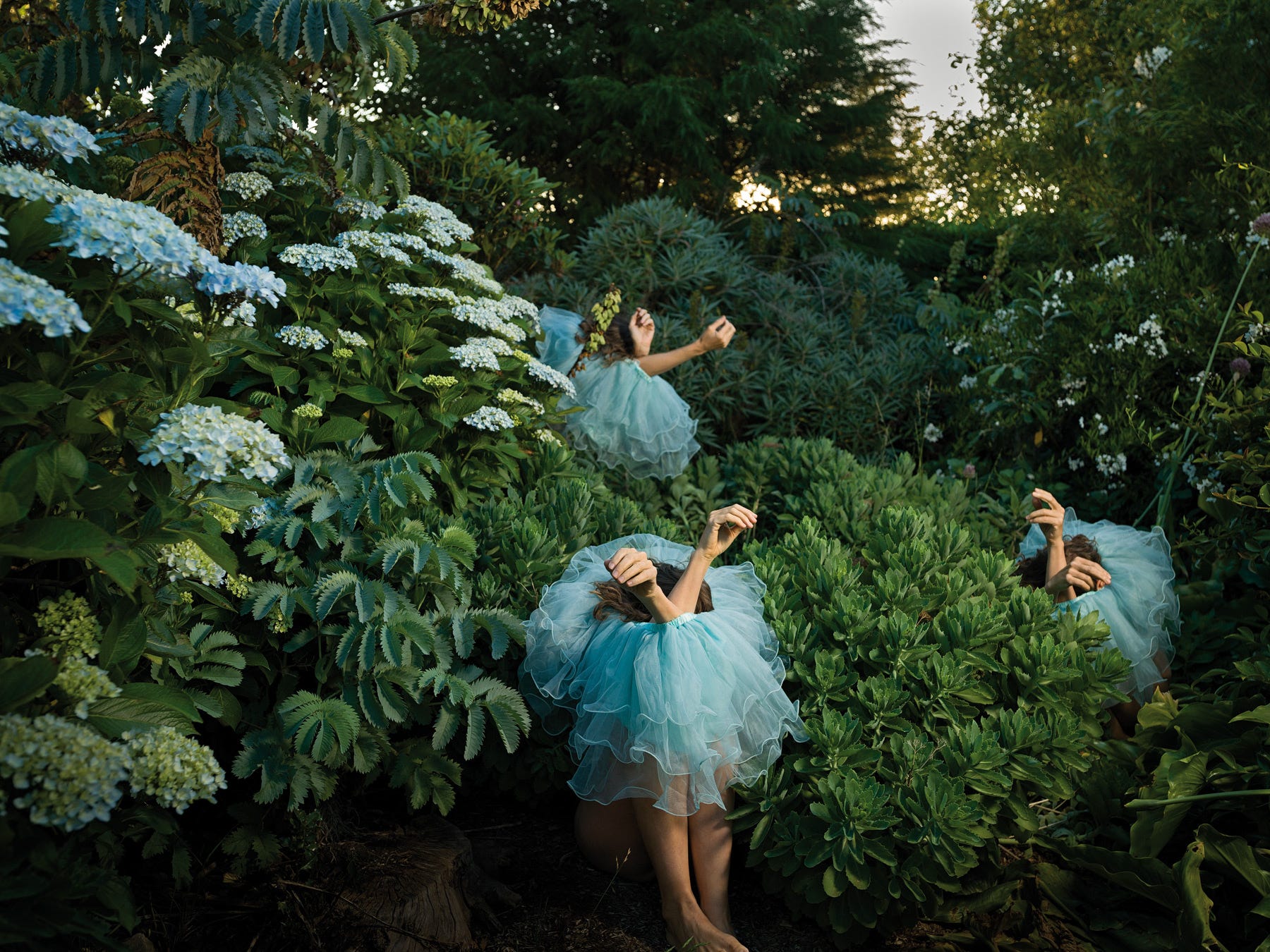
P.S. This month’s featured artist is critically acclaimed Australian artist Tamara Dean. In her work, the boundaries between self and organic world dissolve. Her practice extends across photography, installation and moving image, and her work makes the simple and succinct point that humanity is neither separate nor superior to nature. Rather, we are a part of it, as vulnerable to the same environmental pressures as every other living creature.